
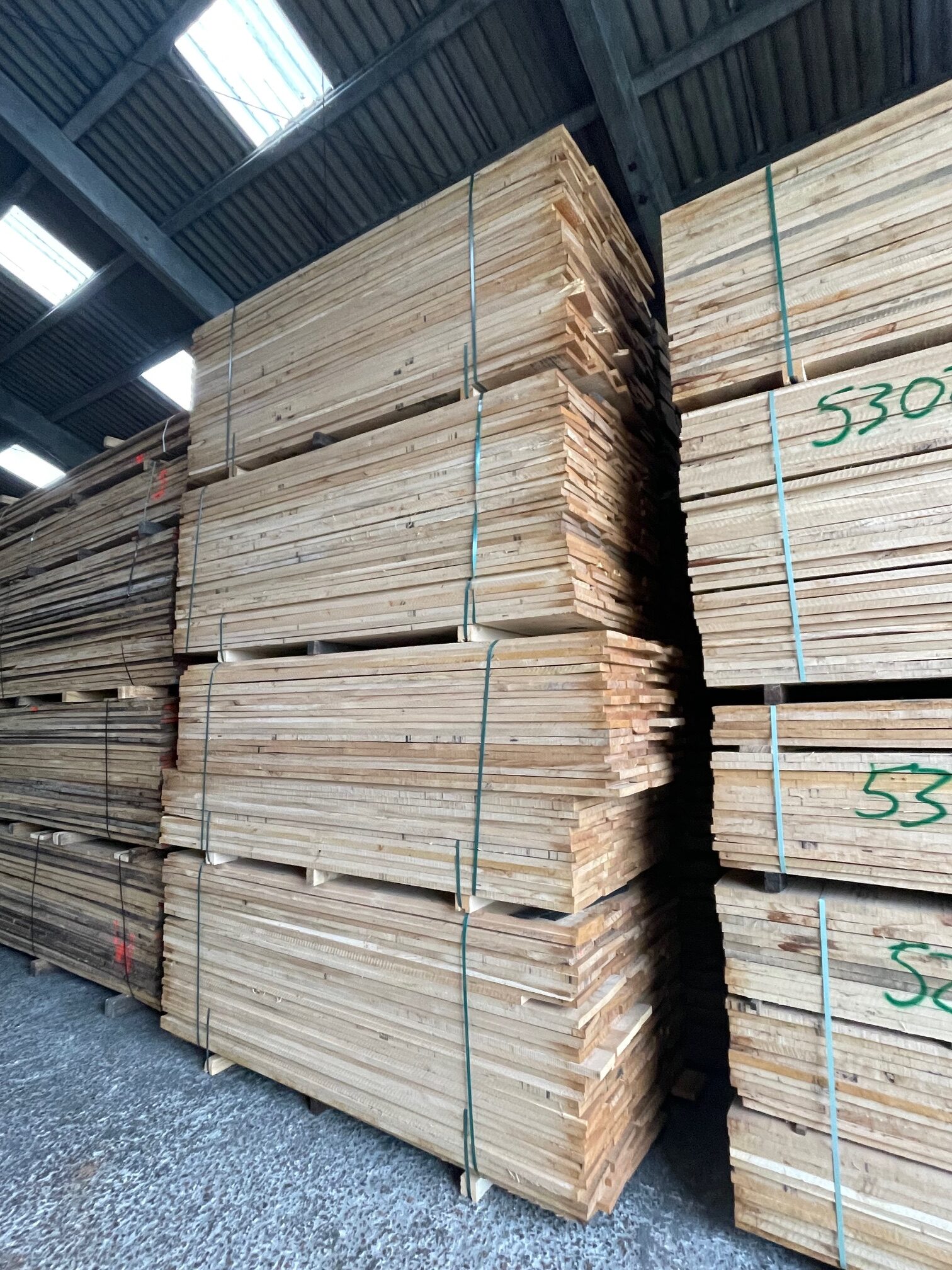
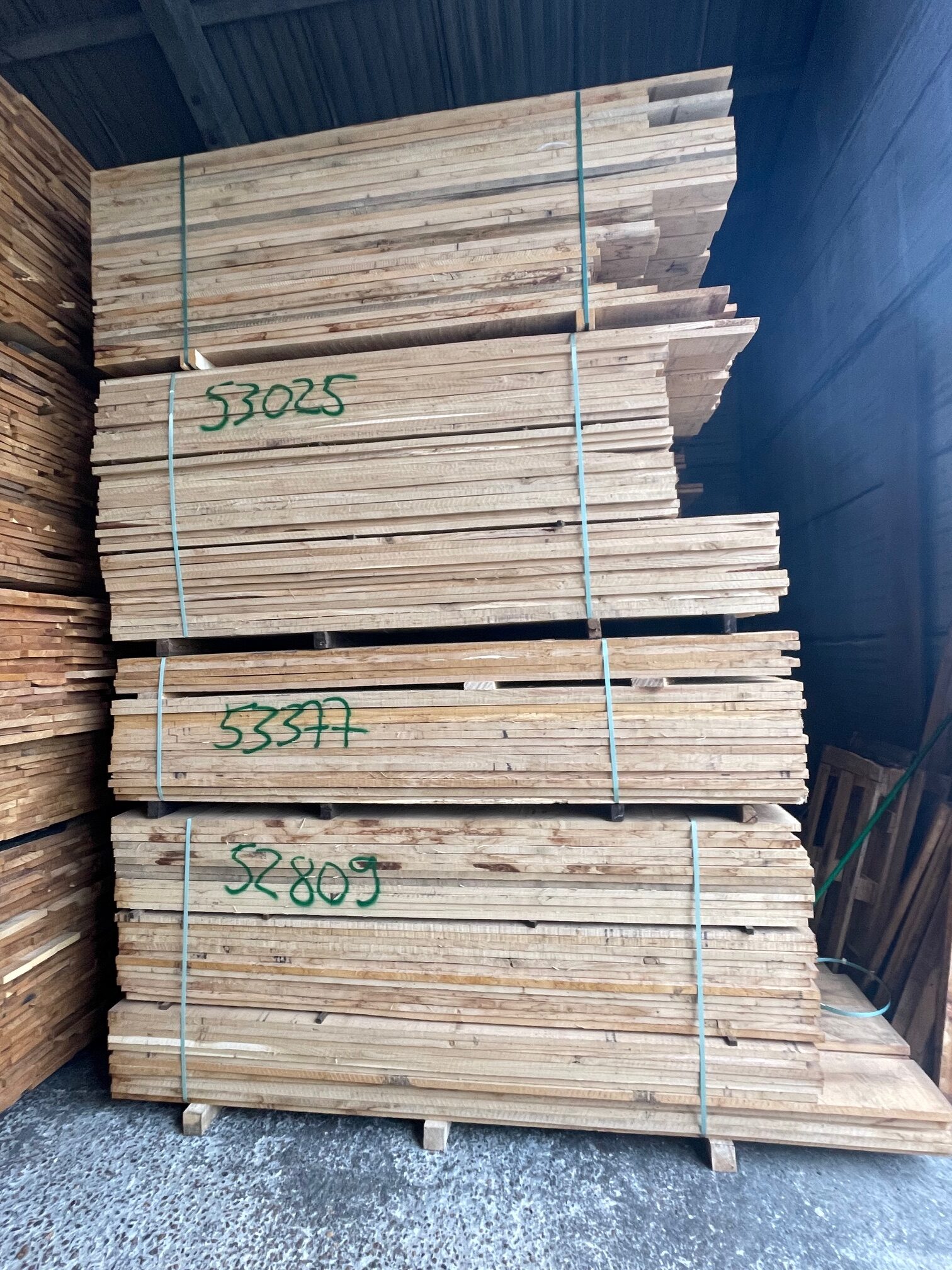
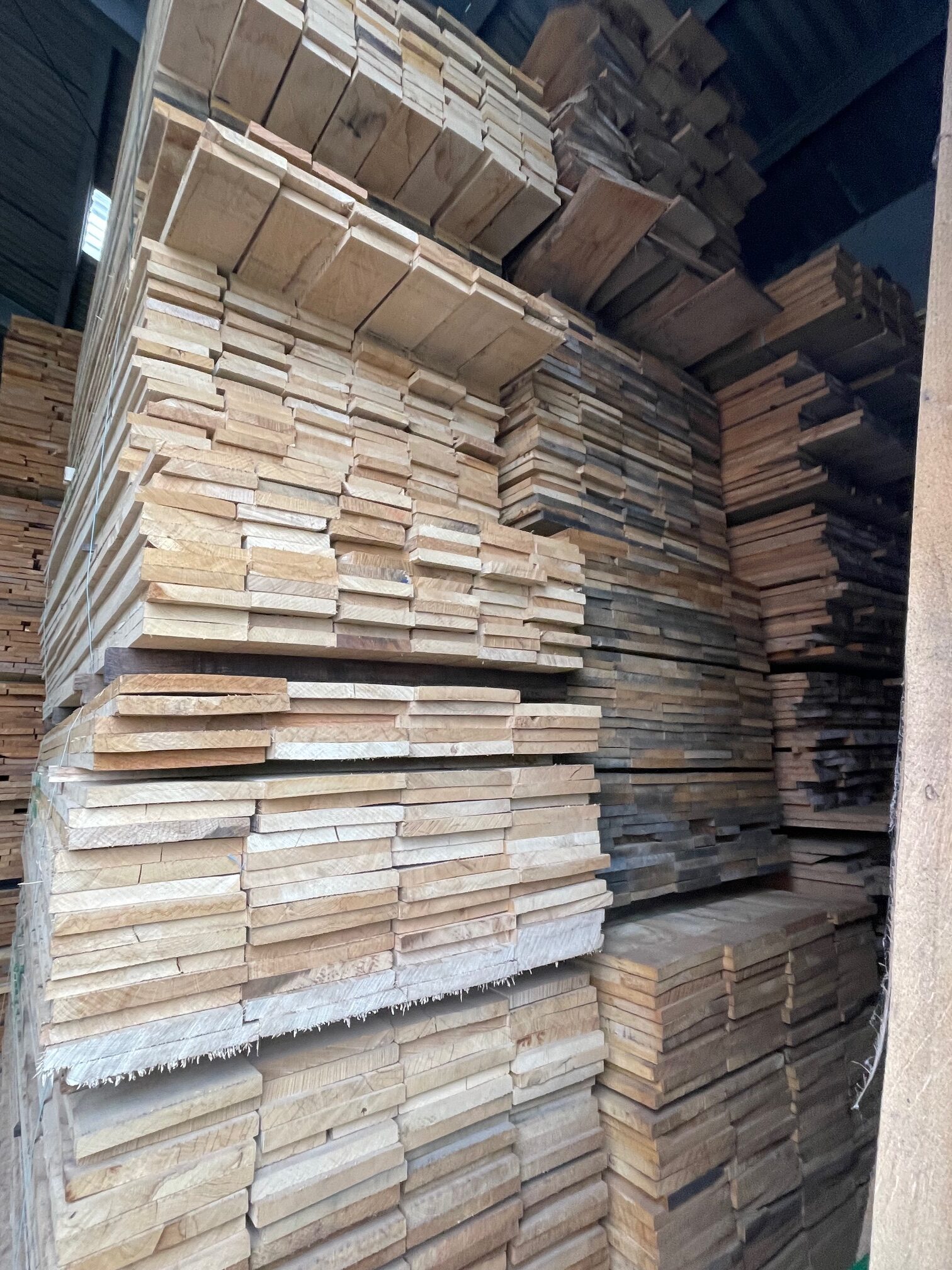
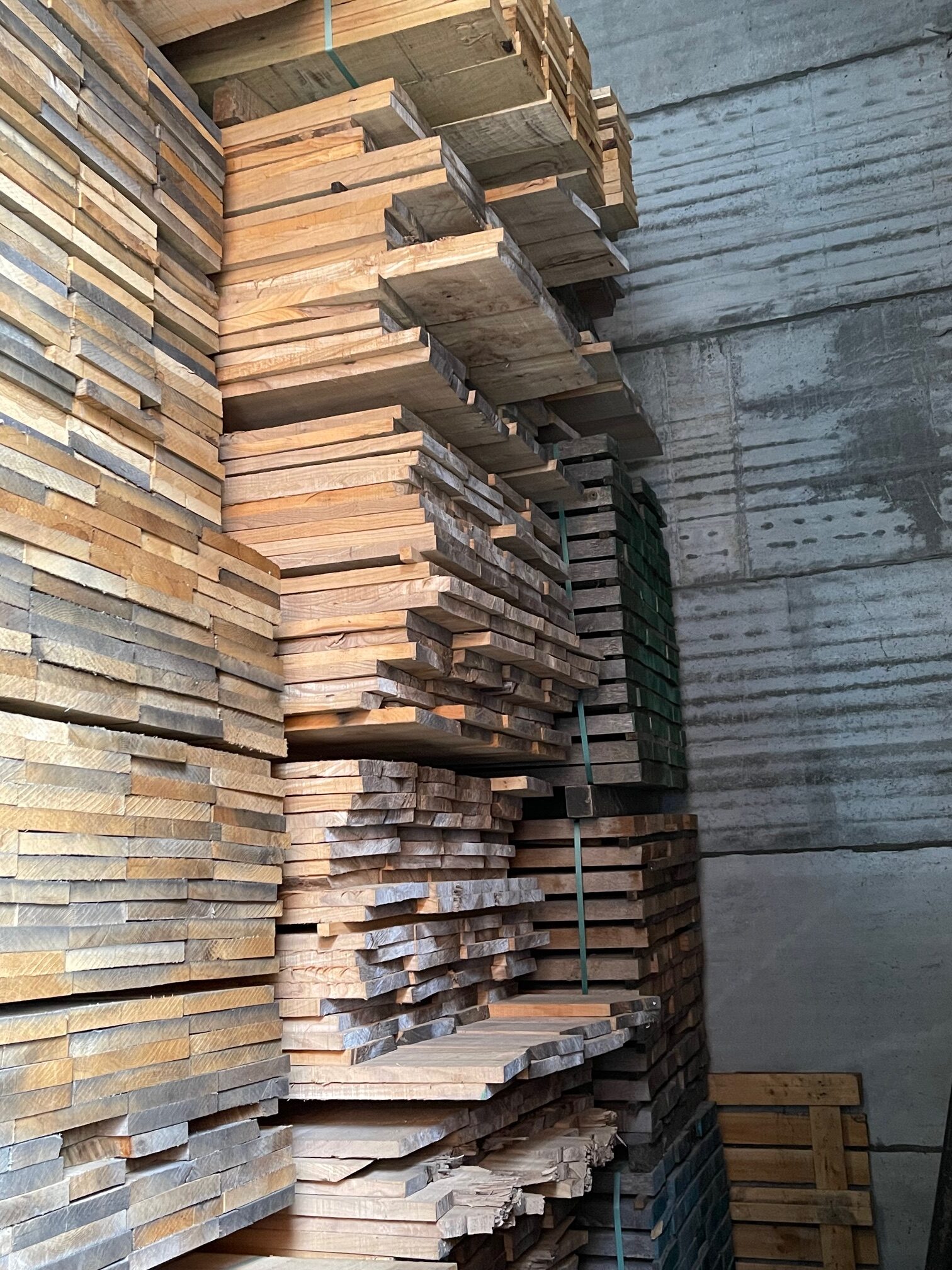
Elm timber refers to wood sourced from the elm tree (genus Ulmus). Elm timber is known for its distinctive grain patterns, durability, and versatility, making it a popular choice for various woodworking applications.
Characteristics of Elm Timber:
- Distinctive Grain: Elm timber is characterized by its unique grain patterns, which often feature swirling or interlocking patterns that add visual interest to finished products.
- Durability: Elm timber is known for its durability and resistance to splitting, making it suitable for use in furniture, flooring, and other high-traffic applications.
- Flexibility: Elm timber has good bending properties, making it ideal for projects that require curved or shaped components, such as chair arms or boat building.
- Workability: Elm timber is relatively easy to work with using both hand and machine tools. It holds screws and nails well and accepts stains and finishes evenly.
- Appearance: Elm timber typically has a light to medium brown color with distinctive grain patterns that vary depending on the species. It has a straight, uniform grain that gives it a clean and contemporary look.
- Versatility: Elm timber is used in a wide range of applications, including furniture making, cabinetry, flooring, millwork, and turning.
- Availability: Elm timber is readily available in many regions where elm trees grow, making it a popular choice for both professional woodworkers and hobbyists.
Overall, elm timber is valued for its distinctive appearance, durability, and versatility, making it a reliable choice for a variety of woodworking projects.